
Discover the Power of Phycocyanin: The Natural Blue Colorant for Your Products
- Feb 16
- 2 min read
Updated: Mar 2
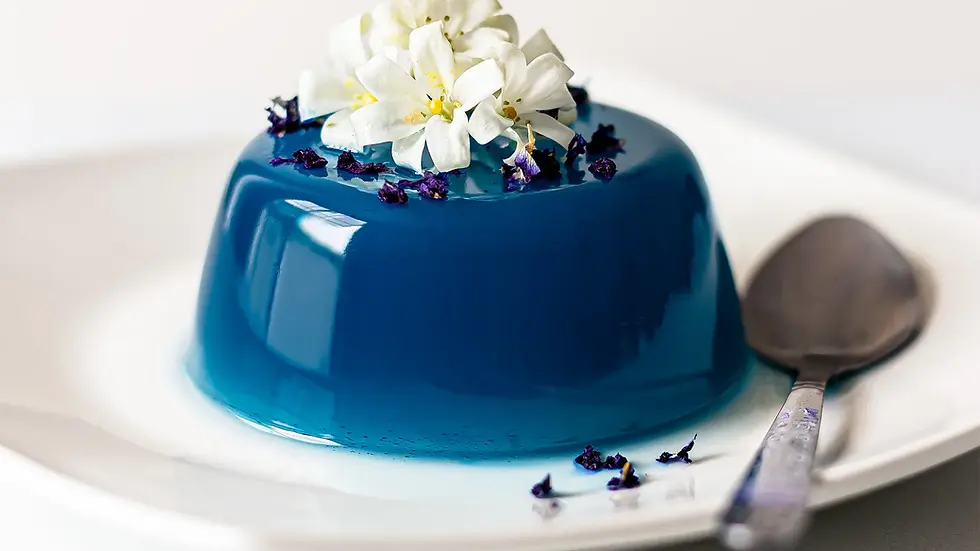
You want a real natural blue in food. You don’t want a blue that fades, turns green, or dies the moment it touches your process. That’s where phycocyanin comes in.
What is Phycocyanin?
Phycocyanin is a blue, water-soluble protein complex found in spirulina. In plain English, it gives you an insanely nice, bright blue. But here’s the catch: it behaves like a sensitive ingredient, not like a synthetic dye.
Where does it work best? In gentle processing environments with friendly formulations. Think about cold or low-heat products with a neutral pH. You want to protect it from light and oxygen.
Common Applications for Phycocyanin
Here are some common applications where phycocyanin can shine when handled correctly:
Cold Beverages: Perfect for drink mixes that don’t sit too acidic.
Confectionery: Add color late in the process for better results.
Bakery Goods: Icings, frostings, fillings, and decorations work well.
Dairy Products: Great for yogurts and desserts, especially at a neutral pH.
Frozen Treats: Low temperatures help, but watch out for light and oxidation.
Formats of Phycocyanin
Phycocyanin is typically available as a water-based liquid concentrate or as a powder. The powder can be a straight dried extract or an encapsulated version designed for better stability and easier handling. Some products also come in a paste style concentrate, depending on your process and dosing needs.
Challenges with Phycocyanin
What usually breaks phycocyanin is predictable. It’s why so many “natural blue” projects get stuck.
Heat: The obvious killer. If your process relies on high-temperature holds, you need a strategy.
Low pH: Acidic systems are tough. Often, you’ll need protection or have to accept losing intensity over time.
Light: Brutal, especially in clear packaging or bright retail lighting.
Oxidation: Slowly eats color, and trace metals can speed up degradation.
Sensory Issues: If the ingredient isn’t clean enough, you can get off notes in your product.
Our Approach at Tint Biotech
So, how do we tackle these challenges at Tint?
First, we treat phycocyanin like a performance ingredient, not a commodity color. This means controlling the raw material and extraction logic. We focus on purification and stabilization. We design for repeatability because batch variation is what destroys scale.
We work from the application backward. We consider your pH, temperature profile, packaging, shelf life target, and cost per use. If your product needs extra protection, we employ stabilization strategies like buffering and careful processing conditions. When necessary, we use microencapsulation approaches that protect the color without wrecking solubility or mouthfeel.
Validation and Data Sharing
Then, we validate in real applications. If you need data, we share what matters under NDA.
Send us your product basics: target shade, format, pH range, processing temperatures, packaging, and shelf life goal.
We will tell you straight if phycocyanin is a fit, where it might fail, and what approach gives you the best shot. If it makes sense, we move to samples and an application plan.
Conclusion
In a world where consumers demand clean-label ingredients, phycocyanin stands out as a powerful option. It’s time to embrace this natural blue colorant and revolutionize your products.
Let’s make your food vibrant and appealing while meeting the growing demand for natural ingredients. Reach out today to explore how phycocyanin can work for you.
---wix---
Comments